
The Smithsonian's own digitization office outlines its 3D programme
With the public X 3D portal unreachable during research, the Digitization Program Office's own pages document what the 3D programme scans and shares.
- Site publication
- September 18, 2026
What the office documents, as retrieved
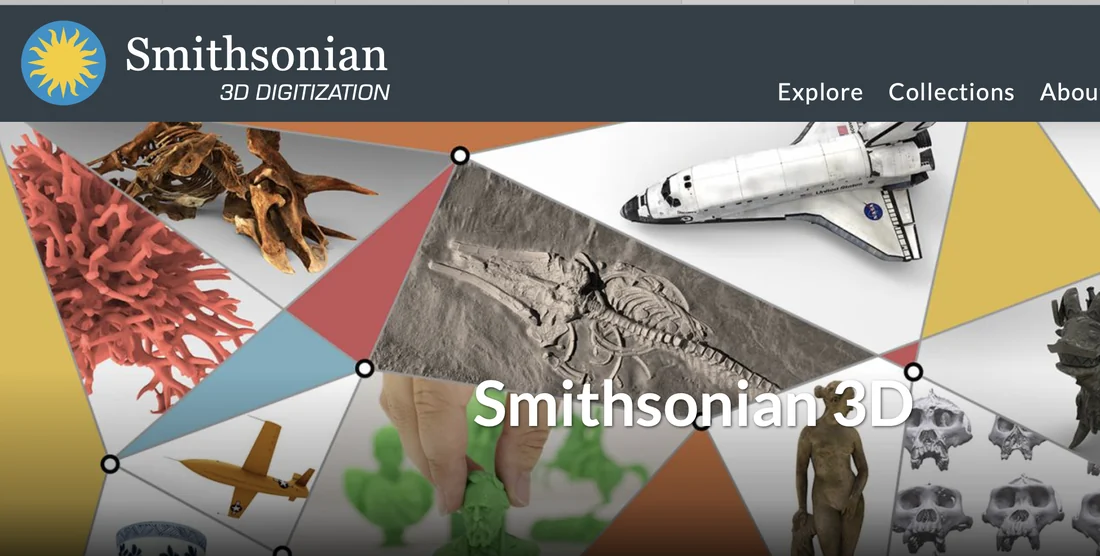
The Smithsonian's public-facing 3d.si.edu portal, commonly associated with the 2013 debut of what is often called Smithsonian X 3D, returned only a bot-verification page throughout this research and could not be opened; that specific launch date is therefore not stated here, rather than guessed at. Instead, the Smithsonian's Digitization Program Office states it was "founded in 2009 as a division of the Smithsonian's Office of the Chief Information Officer," and that 3D digitization is one of three programmes it runs. Its programme page notes the Institution holds "over 157 million artifacts and specimens," and that scanning all of it at one scan per minute would "theoretically require over 300 years" — the office's own explanation for why the programme is selective rather than comprehensive.
What the programme captures and how it gets displayed
The same programme page names past subjects — a Tyrannosaurus rex skeleton, the Apollo 11 Command Module Columbia, the 1903 Wright Flyer, and Abraham Lincoln's life masks — scanned with partners including Autodesk and Google. The office's home page separately references its blog on hosting resulting models through "Smithsonian Voyager," described there as a platform for "interactive 3D web experiences." The working mechanism is capture once, display anywhere: a museum scans a fragile physical object a single time, and any downstream medium — a flat screen, a printed replica, a VR headset, or a spatial or light-field display elsewhere in this archive — can render the same recorded geometry without further access to the object itself.
What is not established here
The office states current priorities — automating capture, building APIs, enabling curator annotation, developing open-source viewers — as goals it is still pursuing, not a finished pipeline. Nothing on the pages opened for this entry specifies file formats, capture hardware, or a public download licence for a given model; those details, if they exist, sit on pages this research did not reach. A 3D scan is also not itself a hologram or a volumetric display: it is a static or animated geometric asset, and which display technology, if any, ultimately shows it to a museum visitor is a separate decision the digitization office's own documentation does not make.
- Which display technology, if any, will actually render a given Smithsonian 3D scan for a specific exhibit?
- Under what licence, if any, can the public reuse a released 3D model?
- How current is a scan against the physical object today, if that object has since been conserved, moved, or altered?
This entry documents the office running the programme, not the specific 2013 public launch its popular name usually evokes, because the page making that claim could not be opened for verification.
Sources & reading trail
States the office's 2009 founding and that 3D digitization is one of its three main programmes.
Source published: Not established · Retrieved: 16 September 2026
Describes the programme's scale, current priorities, and named past scanning projects such as the Apollo 11 Command Module.
Source published: Not established · Retrieved: 16 September 2026
Primary documents establish the record; the mechanism reading and the demo questions are Presence Atlas editorial analysis. This retrospective draft does not imply the site published on the event date.
Continue reading
- A UK museum catalogues 901 hologram-related items online
- Object Capture turns iPhone photos into ready 3D models
- Depthkit turns depth cameras into playable volumetric video
- Browse the complete the archive
Sources & reading trail
- Digitization Program Office — home (Smithsonian)
Retrieved: September 16, 2026 - 3D Digitization Program (Smithsonian Digitization Program Office)
Retrieved: September 16, 2026
The documents above establish the record. The reading and the questions are this publication’s editorial analysis, written after the fact.
Published September 18, 2026, not on the date of the event described.