
A UK museum catalogues 901 hologram-related items online
The Science Museum Group's database records 901 hologram entries, from a 1965 laser test to a 1987 Lindow Man scan, as retrieved.
- Site publication
- September 18, 2026
What the database documents, as retrieved
The Science Museum Group states its collection database covers "over 500,000 objects and archives" across five UK institutions. A search on the term "hologram" returns 901 catalogue entries — 890 objects, 5 people and 6 documents — including 380 individual holograms and 15 hologram sets, spanning white-light reflection and laser transmission holograms, embossed and rainbow types, lenticulars, and equipment such as a "prototype 'Holocam 50' laser machine" from 1986. The earliest item the search surfaces is described as the "first successful hologram made by Argon Laser, 1965," and the single largest contributing collection, 315 items, is credited to Martin Richardson.
Reading a catalogue record as evidence
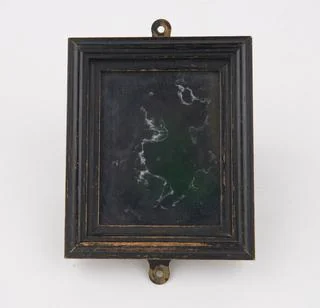
A museum object record is not a technical paper, but it typically fixes maker, date, materials and an object number — exactly the metadata needed to date a technique's practical, exhibited history rather than its laboratory first description. One record states its subject plainly: a "white-light reflection hologram of Lindow Man," made in 1987 by Richmond Holographic Studios Ltd for the British Museum, catalogue number 1987-1028, a copy on glass. That single entry documents who made a hologram, of what, for which institution, and roughly when, without requiring anyone researching it today to have seen the object. A reflection hologram of this kind needs only an ordinary point-source light — a halogen bulb or the sun — to view; no laser is needed at viewing time, and the image has a single-viewer sweet spot that shifts as the head moves, unlike a flat photograph.
What the count does and does not establish
The database, via the collection's own home page, warns that "some historic records may include inaccurate or offensive content," a caution worth carrying into any older entry. The headline figure of 901 mixes object, person and document records, so the more precise count of physical holograms is the 380 individual pieces plus 15 sets, not the round number. What counts as "hologram" in the museum's own tagging is also an indexing choice, not an independent census of the medium, so the total says more about this museum's holdings than about holography as a whole.
- Does the online record include a photograph, and could that single static image misrepresent how the piece looks off-axis?
- Does the museum's technique tag reliably separate reflection, transmission and embossed holograms, or blur them?
- Is a given object on public display, in store, or documented only as a digital record with no current physical access?
As a dated, attributed record of who made what and for whom, the catalogue is strong evidence; as a complete survey of holography, it is only as complete as one museum's own acquisitions and tagging choices.
Sources & reading trail
Gives the count and breakdown of catalogued hologram-related objects, sets, people and documents.
Source published: Not established · Retrieved: 16 September 2026
States the database's overall scope across five institutions and flags limitations of older archival records.
Source published: Not established · Retrieved: 16 September 2026
Gives a single catalogue record's maker, date and technique as a worked example of object-level evidence.
Source published: Not established · Retrieved: 16 September 2026
Primary documents establish the record; the mechanism reading and the demo questions are Presence Atlas editorial analysis. This retrospective draft does not imply the site published on the event date.
Continue reading
- Off-axis beams turned Gabor's idea into viewable holograms
- Browse the complete the archive
Sources & reading trail
- Search results: "hologram" — Science Museum Group Collection
Retrieved: September 16, 2026 - Science Museum Group Collection — home
Retrieved: September 16, 2026 - White-light reflection hologram of Lindow Man
Retrieved: September 16, 2026
The documents above establish the record. The reading and the questions are this publication’s editorial analysis, written after the fact.
Published September 18, 2026, not on the date of the event described.