
Microsoft called HoloLens holographic before it shipped
The 2015 unveiling named waveguide lenses 'holographic' years before HoloLens 2 doubled the field of view.
- Historical event
- January 21, 2015
- First source published
- January 21, 2015
- Site publication
- September 18, 2026
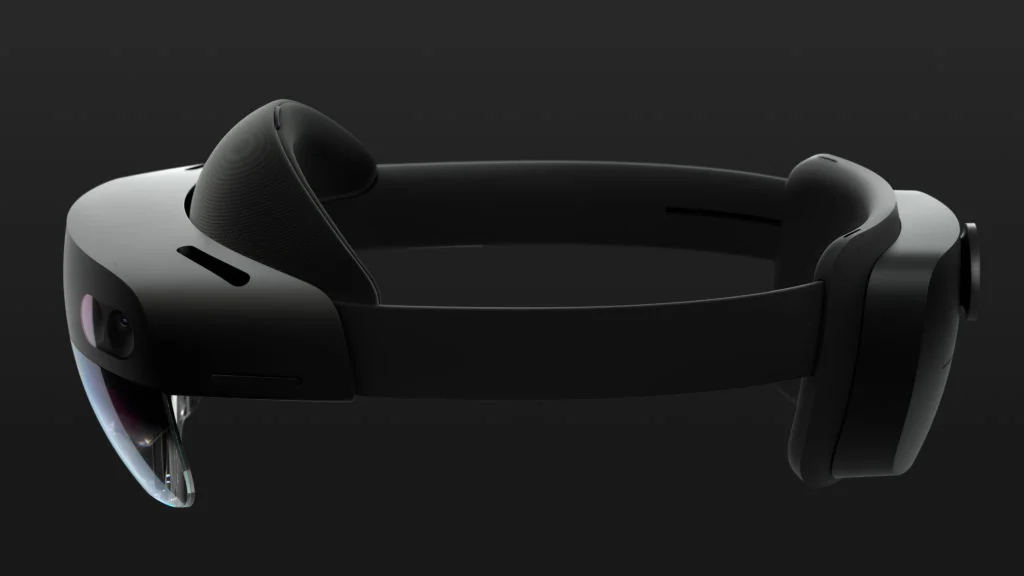
An unveiling that named the optics 'holographic'
On 21 January 2015, Microsoft used its Windows 10 event to introduce what its own announcement called Microsoft HoloLens, "the first untethered holographic computer." The company's language did real work: it described "see-through holographic high-definition lenses" that let a wearer "view and hear holograms in the world around you," and a purpose-built Holographic Processing Unit to process sensor data in real time. Windows 10 shipped with holographic APIs so that, in Microsoft's framing, ordinary Windows apps could also run as holograms. Four years later, on 24 February 2019, Microsoft returned to the same word for HoloLens 2, announced at Mobile World Congress Barcelona.
What the optics actually are
Wavefront reconstruction, the physical process the word 'hologram' names in this publication's usage, is not what puts an image in front of a HoloLens wearer. Microsoft's own hardware specification for HoloLens 2 lists the display optic plainly as "see-through holographic lenses (waveguides)": light from a projector is coupled into a thin sheet of glass, guided by internal reflection, and coupled back out toward the eye, overlaying rendered graphics on the see-through world. Microsoft measures the result in "holographic density," expressed as light points per radian rather than the pixels-per-inch used for ordinary screens, and its 2019 announcement stated that HoloLens 2 "more than doubled the field of view" over the original device while holding that density at 47 pixels per degree. None of this is holography in the optical sense; it is a projected, waveguide-relayed image, and the viewing conditions matter: the wearer must be positioned so light exits the waveguide correctly, and headroom for eye relief and fit shapes comfort over long sessions.
What the record does and does not establish
The 2015 and 2019 announcements are the company's own claims about its product, not independent measurement. They establish what Microsoft said it built and shipped, not a tested account of image brightness, colour uniformity or comfort in a given room. Field of view is the recurring limit named across both waveguide headsets and the wider display category: a narrow rectangular window means holographic content clips at its edges within the wearer's peripheral vision, an artefact no amount of "holographic" branding removes. Readers should treat "doubled" and "density" as vendor-reported figures until an independent test is cited. Microsoft's current hardware specification is a living document, reflecting the device as described on 16 September 2026.
Questions to bring to a demo
- What is the actual angular field of view, and does it match the marketing description of "holograms in the world around you"?
- How does image brightness and colour uniformity change as a wearer looks toward the edge of the waveguide?
- What fit and eye-relief range does the headset require to keep the exit pupil aligned with the eye?
HoloLens named its optics 'holographic' at a moment when no consumer had a vocabulary for waveguide combiners. The label stuck to the category; the mechanism it actually describes is projection through glass, not reconstructed wavefronts.
Sources & reading trail
Company's own description of HoloLens at unveiling as an untethered holographic computer with see-through holographic lenses and a Holographic Processing Unit.
Source published: 21 January 2015 · Retrieved: 16 September 2026
States the HoloLens 2 field of view was more than doubled while holding 47 pixels per degree of holographic density.
Source published: 24 February 2019 · Retrieved: 16 September 2026
Living specification listing 'see-through holographic lenses (waveguides)' as the display optic and holographic density in radiants.
Source published: Not established · Retrieved: 16 September 2026
Primary documents establish the record; the mechanism reading and the demo questions are Presence Atlas editorial analysis. This retrospective draft does not imply the site published on the event date.
Continue reading
- HoloLens stopped being made at the end of 2024
- Waveguide combiners are the window into see-through headsets
- A headset must be built to fit a range of eyes
- Browse the complete the archive
Sources & reading trail
- Windows 10: A New Generation of Windows
Source published: January 21, 2015 · Retrieved: September 16, 2026 - Microsoft at MWC Barcelona: Introducing Microsoft HoloLens 2
Source published: February 24, 2019 · Retrieved: September 16, 2026 - HoloLens 2 hardware
Retrieved: September 16, 2026
The documents above establish the record. The reading and the questions are this publication’s editorial analysis, written after the fact.
Published September 18, 2026, not on the date of the event described.