
A headset must be built to fit a range of eyes
Apple's documented 51-75mm IPD range and software realignment show fit is measured, not assumed.
- Site publication
- September 18, 2026
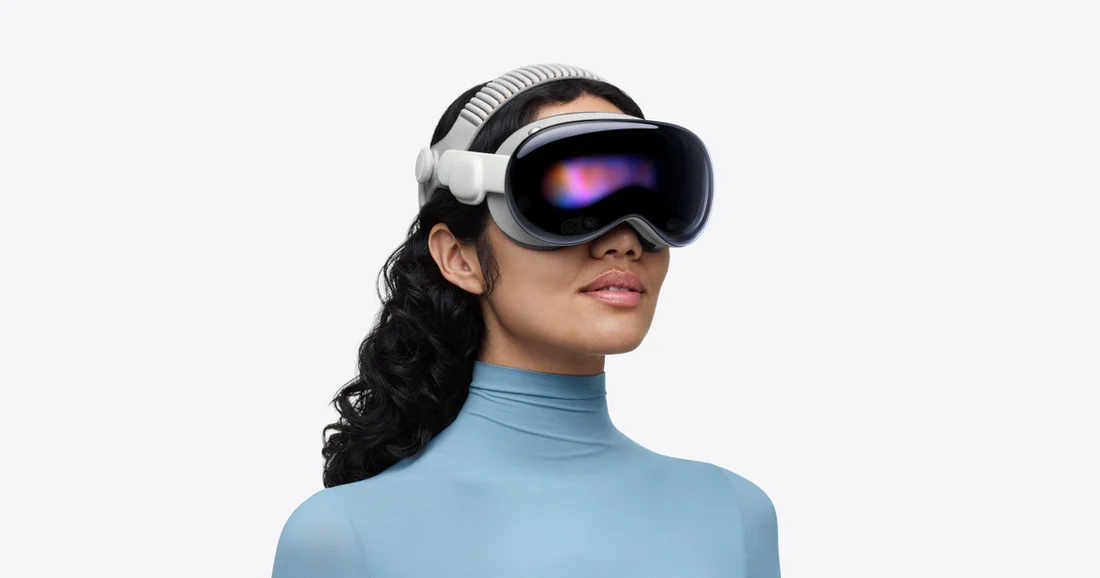
What one manufacturer's documentation actually specifies
Apple's published technical specifications, as retrieved on 16 September 2026, state a supported 'Interpupillary Distance (IPD): 51-75mm' for Apple Vision Pro. That figure defines the population the device is designed to fit: the distance between the centres of a wearer's pupils, which varies by adult and is not chosen by the wearer in the way a shoe size is chosen, only measured and matched. A headset whose optical system is built around a narrower or offset range than a given wearer's actual IPD is being asked to work outside its documented design envelope, whatever marketing copy around it claims.
How the fit is actually corrected
Vision Pro does not use a physical IPD dial. Apple's own guide describes a software step instead: the wearer goes to Settings, then Eyes and Hands, then Realign Displays, and uses the Digital Crown to move the displayed image until they 'see a single, clear image', with an explicit instruction to release the control 'if you feel contact on your nose'. That is a meaningfully different mechanism from a mechanical IPD slider with marked positions: the correction happens in software, against the wearer's own report of a single clear image, rather than against a measured millimetre value read off a scale. A separate fitting guide also ties a 'too close to the displays' warning to Light Seal Cushion thickness, showing eye-to-lens distance is managed as its own, related adjustment alongside pupil alignment.
What happens outside the documented range
Apple's specification page states the supported range without describing, on the page this review could open, what a wearer outside 51-75mm should expect; it does not claim the device is unusable outside that figure, only that the figure is what is documented as supported. This review could not open equivalent current manufacturer specification pages for other headset lines in the time available, so no comparison of adjustment ranges across brands is asserted here; a claim like one headset having a wider range than another would need each vendor's own current specification opened and compared directly, not assumed.
Questions to bring to a demo
- Is the demo unit's fit being adjusted per wearer, or is everyone shown the same fixed setting?
- Is the adjustment a measured physical setting, a software realignment, or both, and does the visitor get feedback on which was used?
- What is the documented adjustment range for this specific model, read from the manufacturer's own current specification rather than from memory of an earlier model?
A single demo unit adjusted for one person's eyes says little about how the same device will perform for a visitor outside that range. The documentation reviewed here confirms a specific supported range and a specific software correction method for one current headset; treating that as representative of every headset on the market would be exactly the kind of unverified extension these entries are written to avoid.
Sources & reading trail
States Apple Vision Pro's supported interpupillary distance range as 51-75mm, the physical adjustment envelope the device is designed to accommodate.
Source published: Not established · Retrieved: 16 September 2026
Describes the correction mechanism as a software-driven display realignment via the Digital Crown, rather than a manual physical IPD slider.
Source published: Not established · Retrieved: 16 September 2026
States that a 'too close to the displays' notification is addressed by changing Light Seal Cushion thickness, showing eye-to-lens distance is also actively managed.
Source published: Not established · Retrieved: 16 September 2026
Primary documents establish the record; the mechanism reading and the demo questions are Presence Atlas editorial analysis. This retrospective draft does not imply the site published on the event date.
Continue reading
- A 2008 study measured fatigue from a stereo display conflict
- The Simulator Sickness Questionnaire replaced ad hoc reports
- A lens array let a headset show where the eye should focus
- Browse the complete the archive
Sources & reading trail
- Apple Vision Pro — Tech Specs
Retrieved: September 16, 2026 - Apple Vision Pro User Guide — Adjust display alignment
Retrieved: September 16, 2026 - Apple Vision Pro User Guide — Adjust the fit
Retrieved: September 16, 2026
The documents above establish the record. The reading and the questions are this publication’s editorial analysis, written after the fact.
Published September 18, 2026, not on the date of the event described.