
Meta showed AR glasses it does not plan to sell yet
Orion demonstrates a glasses-scale waveguide but the company says it will not become a shipping product.
- Historical event
- September 25, 2024
- First source published
- September 25, 2024
- Site publication
- September 18, 2026
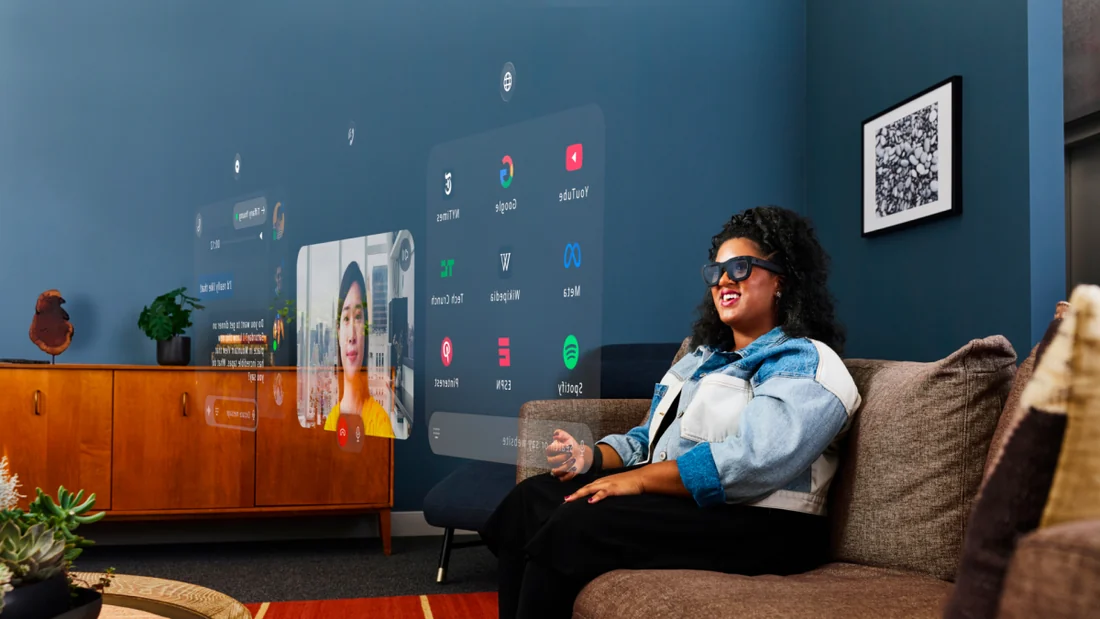
What the announcement claims
Meta introduced Orion on 25 September 2024, describing it in its own announcement as having "the largest field of view in the smallest AR glasses form to date." The company was explicit about what Orion is not: "Orion won't make its way into the hands of consumers," the announcement states, while insisting it is "not a research prototype" but "one of the most polished product prototypes we've ever developed." That distinction between a research demo and a product prototype is the company's own framing, offered without an independent way to verify it from outside Meta.
What would create the image, in plain terms
Fitting a wide field of view into a glasses-sized frame is the same waveguide problem this batch has already traced through HoloLens and other headsets: light from a small projector must be coupled into a thin transparent combiner, guided to the lens, and coupled back out toward the eye, all inside a frame thin enough to resemble ordinary glasses. A nanophotonics review of this category, cited elsewhere in this batch, frames field of view, brightness and comfort as one linked trade-off rather than independent specifications a maker can each maximise; a glasses-scale device claiming a large field of view is, by that framing, reporting where it chose to sit on that trade-off, not escaping it. Meta's announcement does not disclose the waveguide material, grating type or brightness figures for Orion, so none of those specifics can be stated here.
What a prototype demonstration does not establish
A hands-on unit shown to press and select partners is not the same evidentiary category as a shipped, purchasable product: comfort over a full day, manufacturing yield, battery life in a glasses-sized frame and price are all open questions a prototype demonstration does not answer, whatever the demonstration itself looked like. This publication has not seen Orion and makes no claim about how convincing the demonstration was; the only facts available here are Meta's own written statements about what the device is and is not intended to be.
Questions to bring to a demo
- What waveguide type and material does the device use, and has the company published that detail anywhere else?
- What is the actual field-of-view figure in degrees, rather than a comparative claim against unnamed rivals?
- What is Meta's own stated timeline, if any, for moving from this prototype toward a sellable product?
Orion is a useful marker of where glasses-scale waveguide optics stood in September 2024, precisely because the company itself declined to call it a finished product.
Sources & reading trail
Meta's own description of Orion as a glasses-form prototype with the largest field of view in that form to date, explicitly stated not to be a consumer product.
Source published: 25 September 2024 · Retrieved: 16 September 2026
Establishes the general waveguide-combiner mechanism and the field-of-view/comfort trade-off against which a glasses-scale claim should be read.
Source published: 7 October 2020 · Retrieved: 16 September 2026
Primary documents establish the record; the mechanism reading and the demo questions are Presence Atlas editorial analysis. This retrospective draft does not imply the site published on the event date.
Continue reading
- Waveguide combiners are the window into see-through headsets
- Microsoft called HoloLens holographic before it shipped
- Apple Vision Pro shows the world through cameras, not glass
- Browse the complete the archive
Sources & reading trail
- Introducing Orion, Our First True Augmented Reality Glasses
Source published: September 25, 2024 · Retrieved: September 16, 2026 - Waveguide combiners for mixed reality headsets: a nanophotonics design perspective
Source published: October 7, 2020 · Retrieved: September 16, 2026
The documents above establish the record. The reading and the questions are this publication’s editorial analysis, written after the fact.
Published September 18, 2026, not on the date of the event described.