
A hologram fan's real hazard is the invisible blade
HYPERVSN's own installation rules set mandatory clearances a striking demo can obscure.
- Site publication
- September 18, 2026
What one manufacturer's installation documentation requires
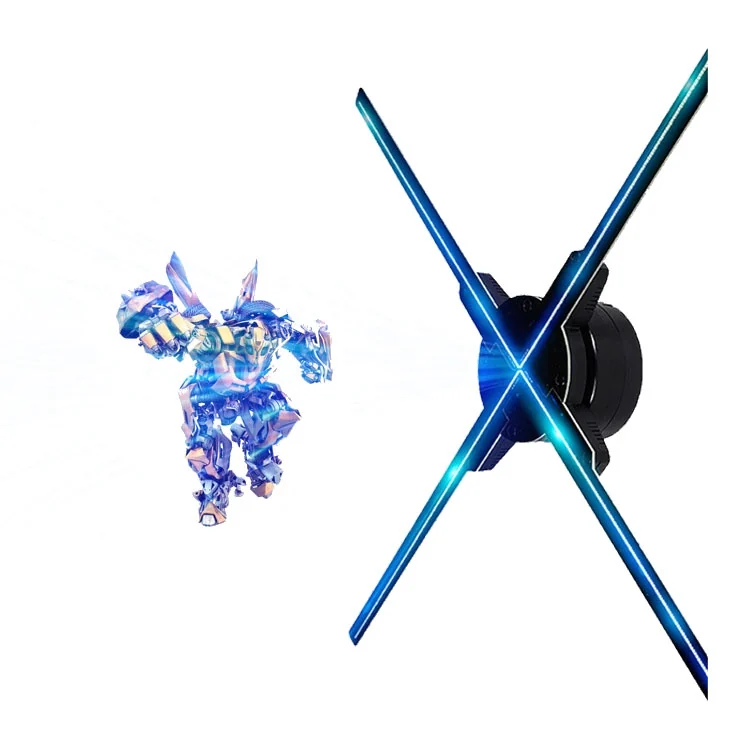
A persistence-of-vision fan display forms its image from LEDs mounted on blades spinning fast enough that the eye integrates the flashes into a solid picture. That only works if the blades themselves stay effectively invisible, which is also the hazard: a spinning blade a viewer cannot see is a spinning blade a viewer will not instinctively avoid. HYPERVSN's own knowledge-base documentation, as retrieved, sets a recommended installation height of 1.7 metres for eye-level viewing when the unit is used with a protective enclosure, and separately requires that 'the lower edge of its rotating rays is at least 3.1 metres above floor level, unless it is protected by a physical barrier or an enclosure'. The same document requires the mounting surface to bear at least four times the equipment's weight, forbids power-on with anyone standing within 0.5 metres of the unit, and rules out installation in children's playgrounds, near animals, near heat or water sources, or next to flammable curtains.
The same limits, stated again for a wall of units
A second document covering the multi-unit SmartV Wall repeats the 3.1-metre rotating-ray height rule and the 0.5-metre power-on clearance, and adds venue-facing figures: a minimum viewing distance of 2 metres and a maximum viewing angle of 60 degrees. Read together, these documents describe an effect only safe to install where a venue can guarantee both vertical clearance above head height and a minimum standoff distance from the front, which rules out low ceilings, tight corridors and close-packed crowd positions regardless of how compelling the floating image looks in a showroom with more space.
What is a manufacturer claim, not a tested one
A third page in the same knowledge base states, in response to a direct question about photosensitive epilepsy and migraines, that the company has 'engineered its holographic displays to produce stable, high-quality visuals that minimise common visual hazards' using rotational stabilisation and high-precision encoders to reduce flicker and jitter. That is the manufacturer's own account of its design intent, not a cited independent test result, and this review found no third-party measurement to weigh against it; a venue should treat it as a claim to verify, not a settled fact, in the same way any flashing-content claim would be checked against a formal test rather than accepted on the word of the party selling the effect.
Questions to bring to a demo
- Does the proposed ceiling height and viewer standoff meet the 3.1-metre and 2-metre figures, or does the room need a physical guard instead?
- Who enforces the 0.5-metre clearance rule at power-on during a live event, and how?
- Has the flicker-reduction claim been checked against a photosensitivity test, or only asserted by the manufacturer?
A spinning-blade display's safety case is a mounting problem before it is a visual one. The documentation reviewed here makes the physical clearances explicit and mandatory; it makes the visual-comfort claims a matter of the manufacturer's own word, and a venue should not let a striking demo blur that distinction.
Sources & reading trail
States mandatory mounting height, minimum rotating-ray clearance, structural load requirements, a pre-power-on clearance rule, and prohibited installation locations.
Source published: Not established · Retrieved: 16 September 2026
States a SmartV Wall's minimum viewing distance, maximum viewing angle, and the same rotating-ray safety height and power-on clearance rules.
Source published: Not established · Retrieved: 16 September 2026
States the manufacturer's own claim that rotational stabilisation and high-precision encoders reduce flicker and jitter, framed here as a vendor claim rather than independent test evidence.
Source published: Not established · Retrieved: 16 September 2026
Primary documents establish the record; the mechanism reading and the demo questions are Presence Atlas editorial analysis. This retrospective draft does not imply the site published on the event date.
Continue reading
- A spinning LED blade draws a flat image that looks solid
- The 2014 laser safety standard classifies hazard by output power
- Broadcast flash-safety guidance also applies to LED walls
- Browse the complete the archive
Sources & reading trail
- HYPERVSN Knowledge Base — What are the installation rules for SmartV Solo?
Retrieved: September 16, 2026 - HYPERVSN Knowledge Base — What are the mandatory safety heights and viewing distance requirements for a SmartV Wall?
Retrieved: September 16, 2026 - HYPERVSN Knowledge Base — Are HYPERVSN holographic displays safe for individuals with photosensitive epilepsy or migraines?
Retrieved: September 16, 2026
The documents above establish the record. The reading and the questions are this publication’s editorial analysis, written after the fact.
Published September 18, 2026, not on the date of the event described.