
The 2014 laser safety standard classifies hazard by output power
IEC 60825-1's 2014 edition sets laser hazard classes; FDA guidance places compliance duty mainly on manufacturers, not venues.
- Historical event
- May 15, 2014
- First source published
- May 15, 2014
- Site publication
- September 18, 2026
What the standard documents
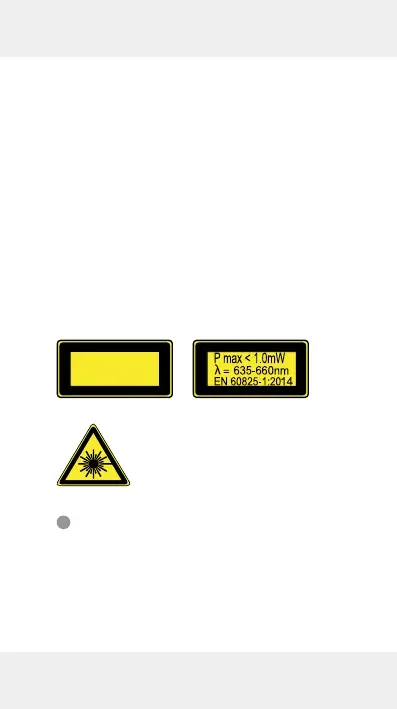
IEC 60825-1, Edition 3.0, titled "Safety of laser products – Part 1: Equipment classification and requirements," was published 15 May 2014 and covers "laser products emitting laser radiation in the wavelength range 180 nm to 1 mm." This edition introduced a Class 1C category, removed an older eye-loupe measurement condition, and revised the accessible emission limits for several classes against updated exposure guidelines. The standard's stated purpose is "to introduce a system of classification of lasers and laser products… according to their degree of optical radiation hazard," running from Class 1, judged safe under normal use, up to Class 4, capable of immediate injury.
What a laser display must be classified against
Any laser display, laser-illuminated projector, or laser show effect used in a venue falls somewhere on this same scale, because classification depends on the optical power that can reach an eye at a given distance, not on whether the light is shaped into words, beams or a screen image. Under FDA's guidance, "manufacturers of laser products are responsible for compliance with all applicable requirements of Title 21 Code of Federal Regulations," which places the classification and labelling duty on whoever built the device. Laser light shows specifically are treated as a separate case, "subject to the requirements of 21 CFR 1040.11(c)," meaning a live show is regulated differently from a sealed consumer product even when it uses an identically classified laser.
Where responsibility actually sits
IEC 60825-1 is a technical classification scheme, not a law in itself; it becomes binding wherever a national regulator adopts or references it, and the IEC's own site describes the commission as publishing "international standards that represent a global consensus," leaving enforcement to others. FDA's page, as retrieved on 16 September 2026, gives limited guidance for the venue operator or promoter running a show, beyond the CFR citation for light shows — so a venue asking who is responsible gets a manufacturer-facing answer from the classification standard and a separate, show-specific citation from the regulator, rather than one combined checklist for the room itself.
- Which laser class does this specific display or laser-illuminated projector carry, and who issued that classification?
- Does this jurisdiction require a separate live-show variance or registration beyond the product's factory classification?
- What audience separation distance does the assigned class require, and is it enforced for a standing crowd as well as seated rows?
The standard gives a precise, dated hazard taxonomy; applying it to a specific room still depends on local regulation the standard itself does not supply.
Sources & reading trail
States the standard's title, edition date, scope and the laser hazard classification system it defines.
Source published: 15 May 2014 · Retrieved: 16 September 2026
States that manufacturers carry compliance responsibility under Title 21 CFR and that laser light shows are separately regulated.
Source published: Not established · Retrieved: 16 September 2026
Confirms IEC's role as the body publishing consensus international standards, of which IEC 60825-1 is one.
Source published: Not established · Retrieved: 16 September 2026
Primary documents establish the record; the mechanism reading and the demo questions are Presence Atlas editorial analysis. This retrospective draft does not imply the site published on the event date.
Continue reading
- A hologram fan's real hazard is the invisible blade
- Broadcast flash-safety guidance also applies to LED walls
- A spinning LED blade draws a flat image that looks solid
- Browse the complete the archive
Sources & reading trail
- IEC 60825-1:2014 — Safety of laser products - Part 1: Equipment classification and requirements
Source published: May 15, 2014 · Retrieved: September 16, 2026 - Laser Products and Instruments (FDA)
Retrieved: September 16, 2026 - IEC — home
Retrieved: September 16, 2026
The documents above establish the record. The reading and the questions are this publication’s editorial analysis, written after the fact.
Published September 18, 2026, not on the date of the event described.