
Haze is a regulated fluid before it is a beam effect
ANSI standards and a fluid maker's own data sheets treat atmosphere as a safety and contrast variable.
- Site publication
- September 18, 2026
A regulated material, not just a visual effect
The entertainment industry's own standards body maintains a specific set of documents for this. ESTA's Technical Standards Program register, as retrieved, lists ANSI E1.5 (2009, reaffirmed 2024) on the permissible composition of aqueous glycol- and glycerin-based theatrical fog, ANSI E1.14 (2018, reaffirmed 2023) recommending what a fog-equipment manual must tell an operator, ANSI E1.23 (2023) on the design, execution and maintenance of atmospheric effects generally, ANSI E1.29 (2009, reaffirmed 2024) as a product-safety standard for the generators themselves, and ANSI E1.40 (2016, reaffirmed 2021) for theatrical dust effects. That is five separate, actively maintained standards for what a beam or gauze effect treats as a single ingredient: haze.
What the fluid actually is
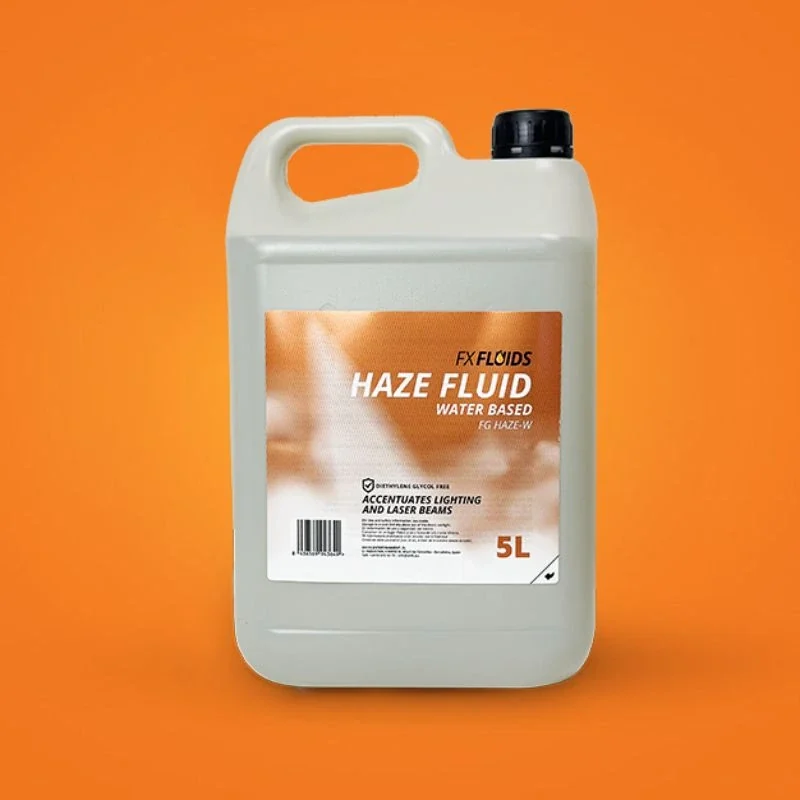
One manufacturer's own product pages, as retrieved, describe a neutral fluid as 'a highly refined and filtered white mineral oil-base fog and haze fluid' and separate low-fog, dense-fog and WB2 fluids as glycol-water-based, each marketed under the heading 'safe, non-toxic' and each with a safety data sheet the manufacturer makes available by fluid and by region. The existence of per-product, per-region SDS documentation is itself the operative fact for a venue: haze is not one substance with one hazard profile, and the composition class, mineral oil versus glycol-water, determines which regulatory sheet applies, not the visual density of the effect on stage.
Why atmosphere changes contrast on the performers behind it
A beam or gauze effect works because haze scatters some of the projector's or luminaire's light sideways, out of the direct beam path, so a viewer off-axis sees a visible shaft or a legible image on the gauze rather than an invisible cone of light hitting a wall. That same scattering reduces the light and contrast reaching the stage or performers behind the effect, because some of the source's output never arrives at the intended surface at all; it is scattered into the room instead. ANSI E1.23's scope, design, execution and maintenance of atmospheric effects, exists precisely because getting this balance wrong either makes the beam invisible or washes out everything behind it, and the correct density is a function of room volume, air handling and light output together, not a fixed machine setting.
Questions to bring to a demo
- Which fluid class, mineral-oil or glycol-water, is being used, and has its current SDS been reviewed for this venue?
- Does the room's air handling hold a stable haze density, or does it drift over a show's running time?
- Has contrast on performers or set pieces behind the effect been checked at the density needed to make the beam visible?
Haze is the medium that makes a beam or a gauze image visible at all, and it is also a regulated consumable with its own safety documentation and its own effect on everything else lit in the room. Treating it as a free visual extra, rather than a parameter that trades off against the contrast of everything behind it, is the mistake the standards and the fluid data sheets both exist to prevent.
Sources & reading trail
Lists current ANSI E1 standards governing theatrical fog/haze fluid composition, fog equipment manuals, atmospheric-effects design and execution, generator product safety, and dust effects, with approval dates.
Source published: Not established · Retrieved: 16 September 2026
Manufacturer documentation describing MDG's fog/haze fluids as mineral-oil-based or glycol-water-based, marketed as safe and non-toxic, with per-fluid, per-region safety data sheets.
Source published: Not established · Retrieved: 16 September 2026
Primary documents establish the record; the mechanism reading and the demo questions are Presence Atlas editorial analysis. This retrospective draft does not imply the site published on the event date.
Continue reading
- Gauze becomes a screen only when the light behind it changes
- An angled sheet of glass fixes where a ghost can be seen
- A published standard puts a number on projection contrast
- Browse the complete the archive
Sources & reading trail
- ESTA Technical Standards Program — Published Documents
Retrieved: September 16, 2026 - MDG — Fluids
Retrieved: September 16, 2026
The documents above establish the record. The reading and the questions are this publication’s editorial analysis, written after the fact.
Published September 18, 2026, not on the date of the event described.