
Disneyland's own archive leaves the Haunted Mansion's tricks unnamed
Disney's official record confirms the 1969 opening date but not the optical technique widely attributed to its ghosts.
- Historical event
- August 9, 1969
- Site publication
- September 18, 2026
What Disney's own archive confirms
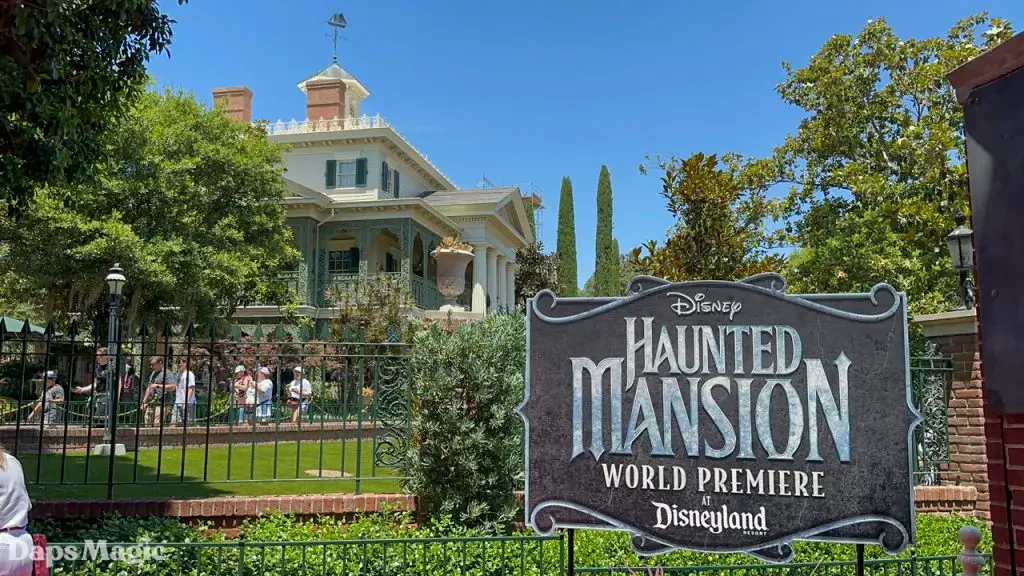
D23, the Walt Disney Company's official archive and fan-club site, states that the Haunted Mansion opened on August 9, 1969 at Disneyland, after construction delays between 1962 and 1963 and a pause while its Imagineers worked on attractions for the 1964-65 New York World's Fair. Beyond the date, the entry is deliberately impressionistic: guests ride past a number of spooky exhibits and special effects that defy explanation, narrated by voice actor Paul Frees. A separate Disney Legend biography credits Yale Gracey, described as a special effects and lighting artist, with devising the grim, grinning ghosts featured in the Haunted Mansion. Neither document names an optical technique.
Two different tricks, often blurred together
The attraction is widely discussed by fans and exhibit designers as combining at least two distinct methods. One is the reflection principle John Henry Pepper described in his 1890 account of his own illusion: an angled, partially reflective surface shows the audience a reflected image of a separately lit performer or object, so a ghost appears to float in a space the audience can also see through. The other is projection onto a solid three-dimensional form, used to make a static sculpted bust appear to sing by projecting a filmed, lit face onto its blank features, so the illusion depends on matching the projected geometry to the sculpture rather than on any reflection at all. These are not the same trick: one relies on a viewer looking through glass or foil at an angle; the other relies on a projector aimed precisely at a physical object. Disney's own public materials do not say which of these, in what combination, the ballroom or hallway scenes actually use.
What an operator's archive is for, and is not for
D23's role is closer to institutional memory and fandom than to technical disclosure, and that shows in what it omits. It records who is credited, when a ride opened, and how visitors are meant to feel; it does not record screen angles, projector placement, or lighting cues, the details a technologist would need to confirm which family of illusion is at work. The widely repeated claim that the ballroom scene is a giant Pepper's ghost is plausible and consistent with the general technique's history, but it is a claim made by outside writers and technologists, not one this attraction's own operator commits to in the documents examined here. That gap is worth stating plainly rather than filling in with confident-sounding detail borrowed from elsewhere.
- Does the operator's own literature ever name the optical technique, or only describe the emotional effect?
- If a reflection principle is used, where is the audience's viewing zone bounded, and what happens outside it?
- Is a talking-bust effect a projected face on a sculpture, or a separate mechanism entirely?
A fifty-plus-year-old attraction can be extremely well documented as design and construction history while remaining almost undocumented, by its own operator, as optics. Both things are true of the Haunted Mansion, and a careful account has to hold them apart.
Sources & reading trail
Disney's own archive entry confirming the Disneyland opening date and describing the attraction only in general terms, without naming an optical technique.
Source published: Not established · Retrieved: 16 September 2026
Disney's own biography crediting Yale Gracey as the special-effects artist behind the Haunted Mansion's ghosts, without describing the technique.
Source published: Not established · Retrieved: 16 September 2026
Primary account of the base Pepper's ghost reflection principle, cited for comparison since Disney's own materials do not name a technique.
Source published: Not established · Retrieved: 16 September 2026
Primary documents establish the record; the mechanism reading and the demo questions are Presence Atlas editorial analysis. This retrospective draft does not imply the site published on the event date.
Continue reading
- John Henry Pepper's own account explains the ghost's glass trick
- Pepper's own 1890 memoir explains the ghost illusion's staging
- An angled sheet of glass fixes where a ghost can be seen
- Browse the complete the archive
Sources & reading trail
- Haunted Mansion (D23 Disney A to Z)
Retrieved: September 16, 2026 - Yale Gracey (D23 Disney Legends)
Retrieved: September 16, 2026 - The True History of the Ghost
Retrieved: September 16, 2026
The documents above establish the record. The reading and the questions are this publication’s editorial analysis, written after the fact.
Published September 18, 2026, not on the date of the event described.