
A 2010 Toshiba TV swapped glasses for nine parallax views
Toshiba's 2010 press release describes a lenticular glasses-free TV using nine views, not a wavefront hologram.
- Historical event
- October 4, 2010
- First source published
- April 14, 1903
- Site publication
- September 18, 2026
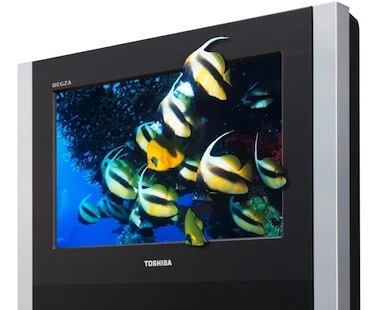
What the 2010 announcement documents
On 4 October 2010, Toshiba issued a corporate release previewing its exhibits for CEATEC Japan 2010, and among them announced two glasses-free 3D televisions, the 20-inch 20GL1 and the 12-inch 12GL1. The release states the sets generate their 3D effect from 'nine parallax images' created from ordinary video content, and names Japan by the end of December 2010 as the availability window. That is what the document establishes: a specific pair of models, a stated image count, a market and a date. It does not claim the technology was new research, and it says nothing about how the sets performed once reviewed independently of the company.
What creates the image
The release attributes the effect to 'an integral imaging system and perpendicular lenticular sheet', an array of small cylindrical lenses laid across the screen that bends light from each pixel column toward a different horizontal direction. Feed the panel nine separately rendered views of one scene and the lenticular sheet sends each toward its own narrow strip of floor space in front of the screen. A viewer's left and right eyes, a few centimetres apart, sample two adjacent views and perceive stereo depth without wearing anything. This is the same family of trick as the century-old parallax stereogram patent: a barrier or lens layer, not a light source, does the directional work, and the word 'hologram' does not belong anywhere near this mechanism.
What the release does not settle
Toshiba's text does not state how wide any one viewing zone is, how many simultaneous viewers the nine-view layout supports before zones repeat, or what a viewer sees crossing from one zone into the next. A contemporaneous IEEE survey classifies this whole family as 'multiview' displays offering 'discrete views across the viewing field', distinct from head-tracked binocular systems and from the smoother, many-view 'holoform' category the same paper treats as a longer-term goal. Moving between zones on a discrete multiview panel typically produces a visible seam rather than a continuous parallax sweep, though neither source measures that seam on this specific set. Nothing in either document reports on picture brightness, on resolution lost by splitting the panel nine ways, or on how the product was received commercially.
Questions to bring to a demo
- How wide is a single viewing zone, and how does the image behave at its edge?
- How many of the nine rendered views are unique content versus repeated or interpolated?
- What resolution does each eye actually receive once the panel is divided nine ways?
Read narrowly, the 2010 announcement documents a lenticular multiview panel with a stated view count and a shipping date, not a verified viewing experience. What became of the wider 3DTV category this display belonged to is a separate question from what a single press release can answer.
Sources & reading trail
States the 20GL1 and 12GL1 models, the nine-parallax-image mechanism, the lenticular sheet, and the announcement date and market.
Source published: 4 October 2010 · Retrieved: 16 September 2026
Defines the multiview/binocular/holoform taxonomy used here to describe how a discrete-view lenticular display behaves at the edge of a zone.
Source published: 1 November 2007 · Retrieved: 16 September 2026
Establishes the century-old barrier-screen parallax mechanism that the 2010 lenticular set is a descendant of.
Source published: 14 April 1903 · Retrieved: 16 September 2026
Primary documents establish the record; the mechanism reading and the demo questions are Presence Atlas editorial analysis. This retrospective draft does not imply the site published on the event date.
Continue reading
- A barrier or a lens decides which pixels reach which eye
- Stereo depth has a comfort zone, and it narrows up close
- Browse the complete the archive
Sources & reading trail
- Toshiba Corporation to bring Leading-edge Technologies to CEATEC JAPAN 2010
Source published: October 4, 2010 · Retrieved: September 16, 2026 - A Survey of 3DTV Displays: Techniques and Technologies
Source published: November 1, 2007 · Retrieved: September 16, 2026 - Parallax Stereogram and Process of Making Same
Source published: April 14, 1903 · Retrieved: September 16, 2026
The documents above establish the record. The reading and the questions are this publication’s editorial analysis, written after the fact.
Published September 18, 2026, not on the date of the event described.