
Proto's cabinet is a display panel, not a wavefront
The maker's own product page describes an 86-inch panel and a camera, a different mechanism from the word hologram.
- Site publication
- September 18, 2026
What the maker's documentation states
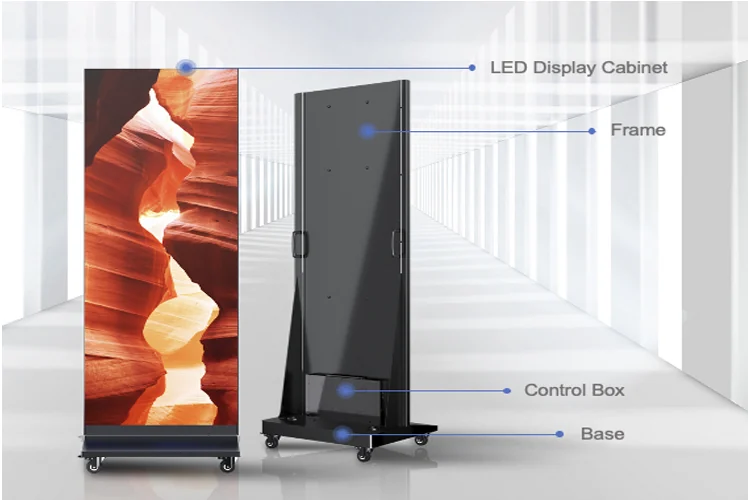
Proto Inc., which sells its device under the Proto Luma name, describes its own technology on its homepage as patented holographic hardware, proprietary operating system, AI avatars and spatial computing delivering life-like and life-size holograms in real time, and states that the system is wearable-free, requiring no headset for the person watching. The product page for the Proto Luma gives the hardware behind that language: an 86-inch multi-touch holographic display at 4K resolution, built into a cabinet roughly 88 by 50 by 24 inches, with an AI-enhanced 4K camera carrying ten-times zoom, stereo speakers, a microphone array, and network connectivity including 2.5 Gbps Ethernet. Those specifications, retrieved from the company's own site on 16 September 2026, describe the current product; this is a living document, not a dated launch record.
What creates the effect, and what a viewer needs
An 86-inch panel inside a cabinet is a flat, emissive screen, the same basic display category as a large television, arranged so its bottom edge sits near the floor and the image fills a life-size human silhouette. That mechanism does not reconstruct a wavefront the way laser holography does, and it does not require a viewer to stand in one narrow zone the way an autostereoscopic light-field display does; anyone in the room can see the screen from a normal seating arc, much as they would a video wall. The live beaming Proto describes uses the built-in camera and a network connection to carry a remote person's image to the cabinet in close to real time, while premade content is simply prior video played back on the same panel. Both use identical display hardware; only the network and camera step differs.
The vendor claim and the documented mechanism
Calling an image on an LED or LCD panel a hologram is the manufacturer's own word choice, repeated across its marketing copy, and it should be read as a product name and a marketing claim rather than as an optical description. Nothing in the pages consulted here describes wavefront reconstruction, and the specification sheet's own vocabulary, a display panel, a camera, an Ethernet port, is consistent with advanced video-conferencing hardware in an unusual cabinet, not with holography in the sense this archive reserves for laser-recorded interference patterns.
Questions to bring to a demo
- Is the image on a flat panel, and can it be seen equally well from every seat in the room.
- Is the remote person live over the network, or is this pre-recorded content being played back.
- What does the company mean by holographic in its own documentation, separate from the marketing word choice.
None of this makes the device uninteresting as a presentation tool; a life-size networked screen in a striking cabinet is a real and useful thing. It is just not, on the documentation available, a hologram in the optical sense, and a field guide that reserves that word for wavefront reconstruction has to say so plainly.
Sources & reading trail
States the company's current marketing language for 'hologram' and 'wearable-free' viewing.
Source published: Not established · Retrieved: 16 September 2026
Gives the product's specification: an 86-inch display panel, a 4K camera, and network connectivity.
Source published: Not established · Retrieved: 16 September 2026
Primary documents establish the record; the mechanism reading and the demo questions are Presence Atlas editorial analysis. This retrospective draft does not imply the site published on the event date.
Continue reading
- A tensioned foil scaled Pepper's ghost to concert-size stages
- John Henry Pepper's own account explains the ghost's glass trick
- Rival firms sued over the patents behind a foil illusion
- Browse the complete the archive
Sources & reading trail
- Proto Hologram Inc. - Bringing AI to Life in Physical Spaces
Retrieved: September 16, 2026 - Proto Luma - Life-Sized Holographic Device by Proto Hologram
Retrieved: September 16, 2026
The documents above establish the record. The reading and the questions are this publication’s editorial analysis, written after the fact.
Published September 18, 2026, not on the date of the event described.