
A modular panel's own patents specify a 120-degree zone
Light Field Lab's marketing pages were unreachable; its own patents state a real, specific viewing angle instead.
- First source published
- January 1, 1996
- Site publication
- September 18, 2026
What the record documents
Light Field Lab announced a display platform it calls SolidLight in 2021, but the company's own marketing and press pages returned certificate and connection errors throughout this review and could not be opened; nothing from those pages appears here as a result. What can be verified instead are the company's own patent filings, which are dated, public, and written in more precise technical language than a press release usually is. A patent filed in 2017 with a priority date of 15 July 2016, naming Light Field Lab inventors Brendan Bevensee and Jonathan Karafin, and a separate patent filed in 2016 naming inventor Daniel Smalley, together describe the mechanical approach behind the company's flat-panel light-field displays years before the SolidLight name was used publicly.
What creates the effect
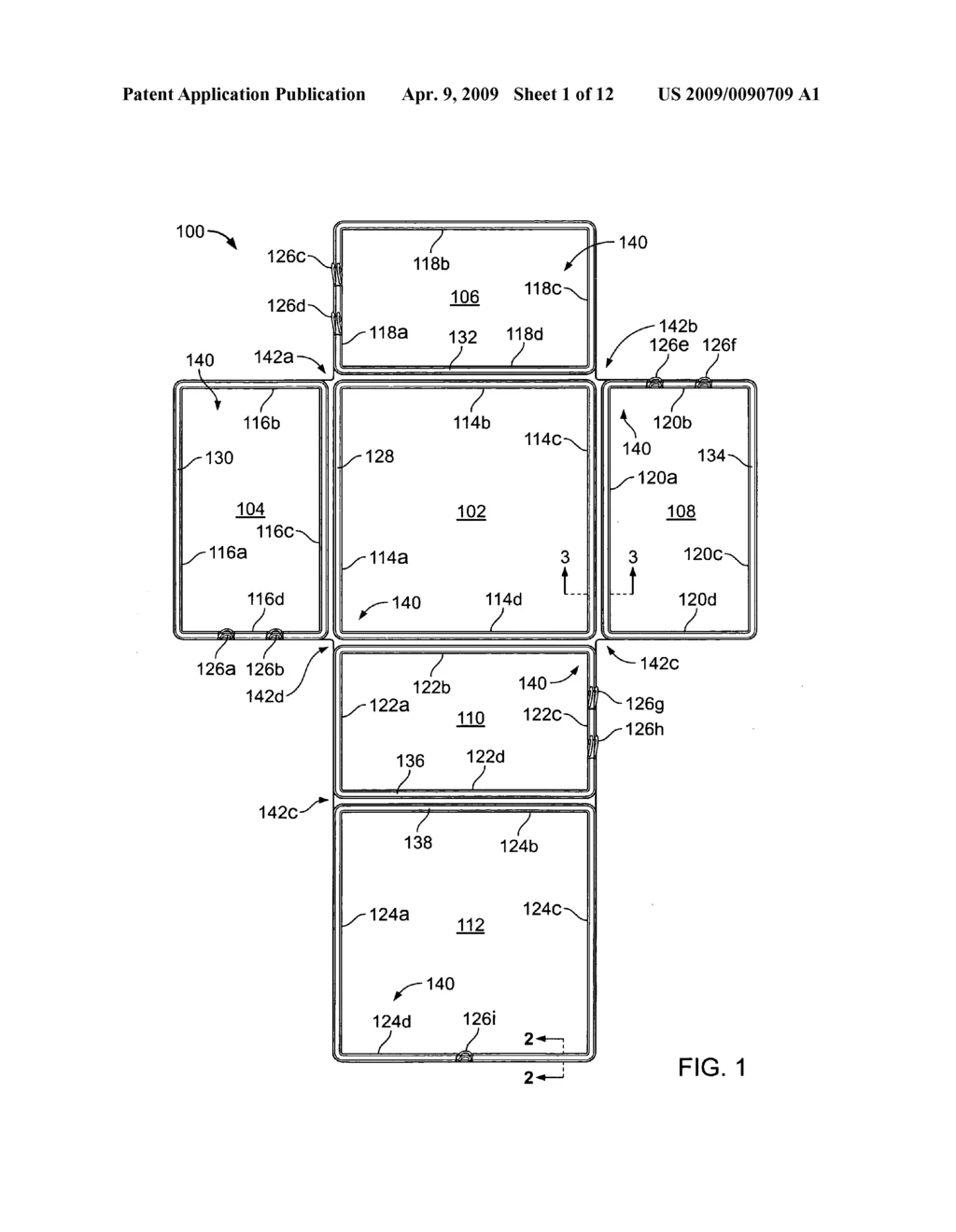
The 2017 patent describes projecting a '4D plenoptic function' - the same mathematical description of a light field used in the foundational 1996 light-field rendering paper by Marc Levoy and Pat Hanrahan - through stacked waveguide and relay elements, so that 'the viewed position of the converged energy propagation paths in space do not vary as the viewer moves around the viewing volume and any number of viewers may simultaneously see propagated objects'. In plain terms, rather than beaming one image toward the room, the panel is built to direct enough distinct light rays that an object appears to sit at a fixed point in space regardless of where in the room someone stands, without glasses. The 2017 patent gives an explicit example figure of '120 degrees, or +/- 60 degrees about the centre of the display' as a stated viewing zone. The separate 2016 patent describes making individual panels 'tileable' and 'coplanar' - flat, edge-matched units meant to combine into a larger seamless surface, with light passing through slits in the panel and a lenslet array reshaping it.
Reading a light-field spec sceptically
This display category is often marketed with large ray-count figures, sometimes phrased as billions of rays; this entry could not reach Light Field Lab's pages to confirm such a figure. Where stated, a ray count describes individually directed beams across a panel, not a resolution figure comparable to a screen's pixel count, and no specific number is confirmed by the patents read here. What the patents do establish, independent of marketing language, is a specific claimed viewing angle and a real architectural difference from a flat 2D screen: multiple simultaneous viewers, no eyewear, and a described capability to project apparent objects forward of the panel surface, not only behind it.
Questions to bring to a demo
- Does the demonstrated viewing angle match the 120-degree figure given in the company's own 2017 patent?
- How many tiled panels, per the tileable-panel patent, are required to reach a given display size?
- What ray or view count is actually being claimed, and how is it being measured?
Absent working marketing pages, the patents are the most concrete record available, and they describe a real optical architecture, even where the branded product name and its most quotable numbers remain unverified here.
Sources & reading trail
States a 120-degree (plus or minus 60 degree) example viewing zone and describes the energy-directing waveguide mechanism behind the company's later SolidLight branding.
Source published: 17 January 2019 · Retrieved: 16 September 2026
Describes the tileable, edge-matched flat-panel architecture, filed 22 March 2016, underlying the company's modular displays.
Source published: 17 March 2020 · Retrieved: 16 September 2026
Defines the 4D light-field concept the company's own patent explicitly invokes, giving independent grounding for what a light-field claim actually means.
Source published: 1 January 1996 · Retrieved: 16 September 2026
Primary documents establish the record; the mechanism reading and the demo questions are Presence Atlas editorial analysis. This retrospective draft does not imply the site published on the event date.
Continue reading
- A light field is a claim about how many rays you capture
- A patented 2001 screen design lets a room share one 3D view
- A desktop light-field display trades resolution for angle
- Browse the complete the archive
Sources & reading trail
- Method of calibration for holographic energy directing systems
Source published: January 17, 2019 · Retrieved: September 16, 2026 - Tileable, coplanar, flat-panel 3-D display with tactile and audio interfaces
Source published: March 17, 2020 · Retrieved: September 16, 2026 - Light Field Rendering
Source published: January 1, 1996 · Retrieved: September 16, 2026
The documents above establish the record. The reading and the questions are this publication’s editorial analysis, written after the fact.
Published September 18, 2026, not on the date of the event described.